Xiaomi SU7 Ultra: the car that talks to your home and… WOW!
Xiaomi SU7 Ultra: the only car that turns on your home lights and heating from the steering wheel! Human x Car x Home ecosystem, autonomous parking, XiaoAi. Coming soon
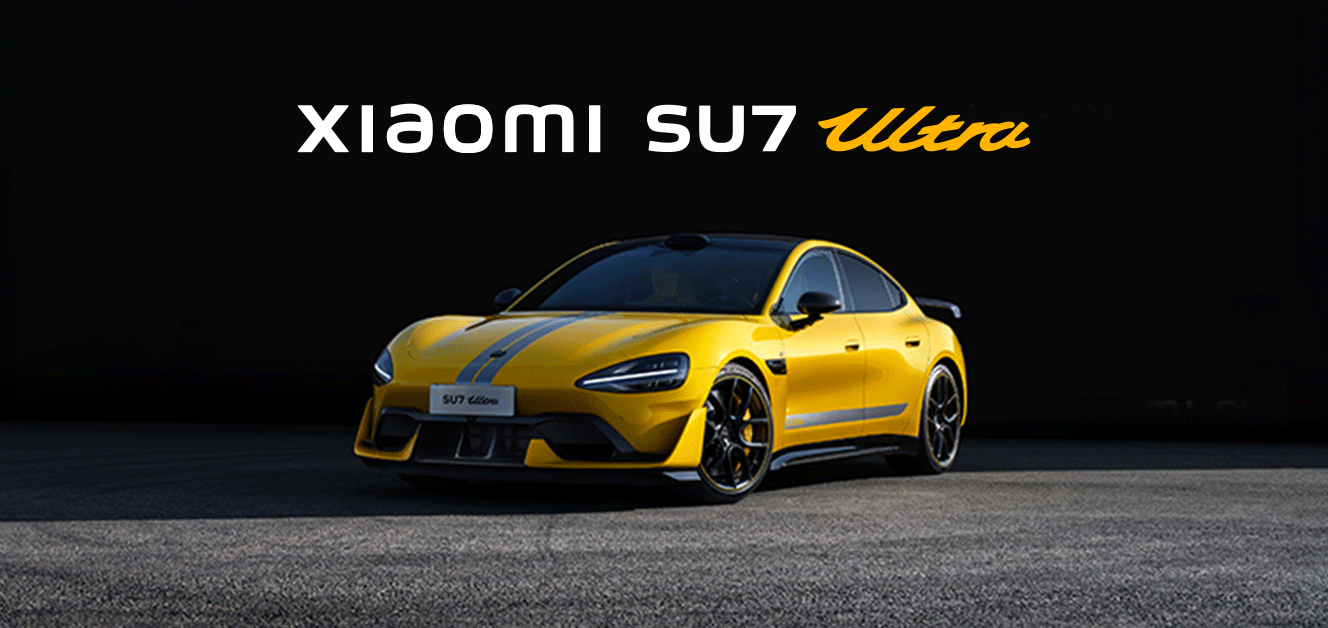
I'll tell you straight away. For those who don't know, I'm an early-adopter "Teslaro." I followed Elon Musk when no one believed in him yet. I defended my Model S in barroom discussions. For me, electric cars and Tesla were the same thing. Then, a month ago, at the Mobile World Congress in Barcelona, I sat in a Xiaomi SU7 Ultra. And I came away with one less certainty and a whole lot more curiosity.
I'm not going to talk to you about horsepower and speed. You can find the numbers everywhere. Instead, I'll tell you about the things that made me say "wow" out loud, in front of a group of journalists who probably thought I was crazy.
First. You sit in the driver's seat. You say—in Chinese for now—"turn on the living room lights at home." Your home lights turn on. From the car seat. Xiaomi calls this system "Human x Car x Home." The car, the phone, and the smart home function as a single ecosystem. Same operating system, same logic. If you have a Xiaomi vacuum cleaner, a Xiaomi lamp, a Xiaomi camera, the car controls them all. When you get close to home, the heating turns on by itself. When you leave the garage, the alarm activates. Tesla has nothing comparable. No traditional car manufacturer does.
Second. The voice assistant. It's not the usual system that understands half a sentence and responds with "I didn't catch that." The SU7 Ultra's assistant is called XiaoAi and runs on the Snapdragon 8 Gen 3 chip. It has a memory. You tell it "take me back to the restaurant from last night" and it knows where to go. You tell it "open the window" and it understands which window to open based on where you are sitting. The microphone system recognizes the position of the speaker in the cabin. If you speak from the back seat, you cannot open the driver's window. It seems like a detail. It is a demonstration of applied intelligence.
Third. Parking. You get out of the car. The car goes to park itself. Not in an open space, but in a multi-story parking garage, navigating through ramps, searching for a free spot, maneuvering between columns. Meanwhile, you do something else. When you need the car, you call it back from your smartphone and it comes to you. This isn't a concept. It's not a promotional video. It's an operational, tested, and available function.
Fourth. The storage compartment under the center console. It cools down to keep a bottle of water fresh. It heats up to keep a lunch warm. With three selectable fragrances to scent the cabin. A refrigerator and an aroma diffuser inside a sedan. Those who have been building cars for a hundred years hadn't thought of it. Those who build smart appliances, did.
Fifth. The central screen is an OLED panel managed by HyperOS, the same operating system as Xiaomi phones. Applications open instantly. There is no lag. Anyone who owns a Tesla knows those moments when the screen freezes and you have to wait. That doesn't happen here. Two additional screens for rear passengers complete the experience, with Dolby Atmos audio delivered by a system that transforms the cabin into a concert hall.
Sixth. The "transparent vision" mode. During maneuvers, cameras and sensors create an image that shows you what is under and around the car, as if the hood and panels were transparent. You see the curb, you see the edge of the road, you see the obstacle you normally wouldn't see. For those who have trouble parking, this feature alone is worth the price of the car.
Seventh. Safety. Eleven cameras, three LiDAR sensors, five radars, and twelve ultrasonic sensors work together. Tesla eliminated radar and ultrasonic sensors, betting everything on computer vision. Xiaomi does the opposite: more sensors, more redundancy. The system brakes automatically if it detects a collision risk at low speed. If you press the accelerator by mistake, the car recognizes the situation and blocks the acceleration. For those driving in the city, among pedestrians, bicycles, and scooters, it’s a precious safety net.
Now, the question: when does it arrive here? The SU7 Ultra costs about CHF 60,000 in China. European and Swiss homologation is underway. Xiaomi has opened a research center in Munich. The arrival on the old continent is expected by 2027. Tariffs and trade tensions are slowing things down, but the first units for technical validation are already circulating on European roads.
I remain a Tesla fan. But after that half hour in Barcelona, I understood one thing. When a company that produces phones, vacuum cleaners, lamps, cameras, and air purifiers decides to build a car, the result is not a car with a good screen. It is an ecosystem on wheels. And for those of us living surrounded by technology, that truly changes everything.